
Ensure Your Workwear Meets the Relevant Australian and New Zealand Standards for High Visibility Garments.

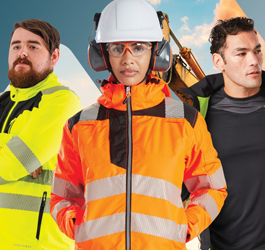

Buying cheap high visibility clothes doesn’t always mean they meet the relevant standards. Make sure you do your research to ensure you are protected.
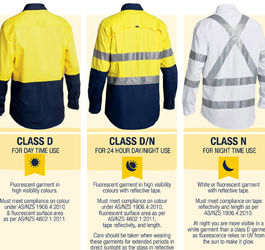
There are a number of factors which should be taken into consideration when wearing high visibility workwear. Class Day (D) garments should not be worn for visibility purposes at night. If your garments have any attachments, screen prints, markings, alterations, coverings or accessories which were not incorporated into the original product, may potentially put you at risk by reducing the high visibility performance of the garment or leave the garment lacking the garments compliance with the relevant standard.
For safety reasons, some garments must be made from a natural fibre which therefore leaves it incapable of retaining its fluorescent colour. In this case, the product is tested for brightness for non-fluorescent materials.
On the other hand, man-made fibres are capable of retaining a fluorescent colour, and are tested for brightness for fluorescent colours. All of our high visibility products are tested and must meet or exceed the minimum requirements for:
- Brightness for non-fluorescent materials
- Brightness for fluorescent materials
- Chromaticity
In order for workwear to meet Australian Standards, materials which are classified as high-visibility daytime or Class D, must be manufactured from either a durable fabric of woven or knitted cotton or a man-made fibre which contains a fluorescent pigment or high visibility dye, where a fluorescent plastic coating has been applied.
These materials are tested and must meet the minimum requirements for:
- Colourfastness to light, washing and perspiration
- Colour retention testing
- Daylight colour and brightness factor
Brands such as Hard Yakka, include a Fade Shade Label which helps you to identify any change in your garment colour. This label colour will retain its colour through wash and wear, and will continue to remain its colour even when the fabric on the garment begins to fade.
This label is placed discreetly on the front of the garment, which makes it easy for Health and Safety officers as well as yourself to assess when your high visibility garment is no longer compliant with standards.
Related Posts
Reflective Tape and High Visibility Garments: Safety Info You Must Know


